Showing posts with label Method. Show all posts

Monday, May 04, 2009

Prolife Movement Weakness

In the Biblical story of David and Goliath, David initially put on a coat of mail and a brass helmet and girded himself with a sword: he prepared to wage a conventional battle of swords against Goliath. But then he stopped. “I cannot walk in these, for I am unused to it,” he said (in Robert Alter’s translation), and picked up those five smooth stones. What happened, Arreguín-Toft wondered, when the underdogs likewise acknowledged their weakness and chose an unconventional strategy? He went back and re-analyzed his data. In those cases, David’s winning percentage went from 28.5 to 63.6. When underdogs choose not to play by Goliath’s rules, they win, Arreguín-Toft concluded, “even when everything we think we know about power says they shouldn’t.Malcolm Gladwell


The prolife movement is in the underdog position. As such it needs to acknowledge its weakness and chose an unconventional [indirect] strategy. The weaknesses as I see them and a quick answer….

  1. It makes us uncomfortable to make others uncomfortable. (blessed are those that mourn)
  2. We don’t want to look intolerant. (blessed are the meek)
  3. We don't want to be judgmental. (blessed those who hunger and seek righteousness)
  4. We don’t want to make people face hard realities and give up potential goals and resources. (blessed are the poor)
  5. We fall for the compartmentalization of separation of Christian ethics from government. (blessed are the pure of heart)
  6. We don’t like to fight. (blessed are the peacemaker)
  7. We don’t want to further hurt those who have had abortions. (blessed are the merciful)
  8. We don’t want to be hated. (blessed are persecuted for seeking righteousness for my sake)

The unconventional strategy should be to follow Jesus in the beatitudes without hesitation.

Saturday, March 28, 2009

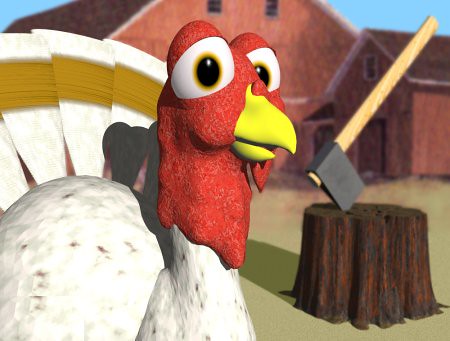
Don't be the Turkey


When I started this blog, I was interested in what I called indirect apologetics. I got this idea through a book named, Strategy that looked at what made successful campaigns in war. The best strategy was to be unpredictable or to attack where it was least expected. Direct attacks were very costly and didn't tend to work. I tried to apply this idea towards bringing people to Christ.

It is time for a change in course due to the situation that Christians find themselves.

Instead of thinking exclusively on how to bring people into the truth of Christ. I am going to now focus more on keeping fidelity to Christ. I am going to try to tinker and take risks to do this.

Secular culture has been extremely effective with using indirect tactics against Christians. So the question that I am going to keep in mind is the following; How do you protect against the constant barrage of indirect attacks by the media and secular society so that you do not end up being a turkey.


I have been influenced by the book by Nassim Nicholas Taleb entitled The Black Swan: The Impact of the Highly Improbable. In Taleb's book he used an annalogy of the turkey. The turkey's every day experience confirms the belief that the owner cares for his best interest. Every day the owner feeds and gives waters to the turkey. This keeps going until the turkey reaches a maximum level of trust for his owner but then comes the chopping block.

What I want to do is to look for ways as a Christian, immersed in a powerful secular society, to not be the turkey.

Thursday, October 16, 2008

Is art evangelism?


Austin,
I like you're writing and your blog, and am especially interested in what you say about art being persueasive.

Does this mean that art is evangelism?


I don't know how long ago you made this comment on my blog but I just recently saw it. If it was awhile ago, sorry for the slow response.

Art is a form of communication, although not necessarily in a conceptual way. Art can be used in evangelism but not all art is evangelism.

Art can say things that words and concept can't. Science has reduced reality to concepts of thought that fits in our heads. Anything that does not fit, does not exist. Because art points to a reality that is beyond concepts of thought, I believe that art is essential to reconnected people to Christ and his Church.

Tuesday, June 17, 2008

Doctrines You Least Like

A clearly maintained distinction between what the Faith actually says and what you would like it to have said or what you understand or what you personally find helpful or think probable, forces your audience to realize that you are tied to your data just as the scientist is tied by the results of the experiments; that you are not just saying what you like. This immediately helps them to realize that what is being discussed is a question about objective fact - not gas about ideals and points of view.

The new truth which you do not know and which you need must, in the very nature of things, be hidden precisely in the doctrines you least like and least understand. It is just the same here as in science. The phenomenon which is troublesome, which doesn't fit in with the current scientific theories, is the phenomenon which compels reconsideration and thus leads to new knowledge. Science progresses because scientists, instead of running away from such troublesome phenomena or hushing them up, are constantly seeking them out. In the same way, there will be progress in Christian knowledge only as long as we accept the challenge of the difficult or repellent doctrines. A "liberal" Christianity which considers itself free to alter the Faith whenever the Faith looks perplexing or repellent must be completely stagnant. Progress is made only into a resisting material. (C. S. Lewis, Christian Apologetics)

Friday, May 23, 2008

Method of Inderect Apologetics: Art Links

The best defense is a good offense. Indirect apologetics through art is one of the best ways to show a truth when someone is highly biased. The following articles have to do with art and truth. I think anyone interested in art would find these articles useful.

This blog entry talks about the “uncanny valley” and how things that are close, but not close enough, to looking human cause a repulsive reaction. It gives examples through an altered Madonna photo and the movie Polor Express. I thing this idea can be used affectively to represent evil and Satan in art.

This article asks the question, why is symmetry so satisfying in art. It touches on how modern architecture tries to buck this phonomena but without much success.

This article discusses the tension that can arise between truth and facts in art. I don't know if I agree with everything said on this one but it is interesting.

Saturday, September 29, 2007

The Divine Spark

There is just something about this performance that I really like. The music is beautiful but the playfulness back and forth and the creative interchange just adds another dimension to it. I don’t know how you can watch this video and not see the Divine spark in man.


The person who is really in revolt is the optimist, who generally lives and dies in a desperate and suicidal effort to persuade all the other people how good they are. It has been proved a hundred times over that if you really wish to enrage people and make them angry, even unto death, the right way to do it is to tell them that they are all the sons of God. G.K. Chesterton

Thursday, September 27, 2007

Faith and Objective Scholarly Deliberation

I'm not in a writing mood. Just not feeling it. But here is a quote that is very interesting.

faith does not result from straightforward scholarly deliberation, nor does it come directly; on the contrary, in this objectivity one loses that infinite, personal, impassioned interestedness, which is the condition of faith, the ubigue et nusquam [everywhere and nowhere] in which faith can come into existence (29). Søren Kierkegaard, Postscript

Saturday, September 22, 2007

Steve Ray and Indirect Apologetics

I got an email from the religious education director of my parish. She sent me this interview with Steve Ray in regards to his video on St. Paul. She told me that she thought of me when she read the interview. It’s a good interview so go check it out.

I have seen most of the, In the Footprints of God, videos and they are very good. The videos are perfect examples of indirect apologetics. Steve Ray, dressed as Indiana Jones, travels around the globe to find different historical places in the Bible. The videos give a solid feeling of how the events in the Bible are connected to real history. Along the way, Steve happens to do a lot of apologetics but this is not something that you really notice. I think this is the genius of the serious. Steve falling face first in a hole of mud to demonstrate why Mary needed a savior, even though she was immaculately conceived, is a example of doing apologetics without it really feeling like apologetics. I wish I had this argument and demonstration on youtube, it’s classic. (If you don’t know what I’m talking about, go buy his video on Mary)

Steve Ray is a first rate apologist and teacher. He explains in the videos many of the distinctly Catholic doctrines with clarity and common sense. I highly recommend the series.

Friday, September 14, 2007

Tabloid Apologetics

Debates can have the function of teaching but this is not the norm. The goal of winning usually starts to override the search for truth. The worst thing about debates is when it become about personal attacks and defending one’s own good name. This is what I call tabloid apologetics. To ridicule and sneer the opponent becomes a form of entertainment. The other side takes the higher ground and tries to show the injustice of the comments. Jumping from taunts to the moral high ground gains a lot of attention. If attention is what you’re after, then it’s a good strategy. The problem is that the person participating in these tactics begins to lose credibility. It starts to give a tabloid color to everything that is said, even good arguments. So if someone starts to do tabloid apologetics towards you, don’t defend yourself. Don’t document to the world the blow by blow details of how you’ve been wronged. Just take it like a man. Anything less is unlike Christ.

Tuesday, September 11, 2007

Apologetics: damned if you do...damned if you don’t

The studies in this article entitled Persistence of Myths has a lot of implications in regards to apologetics. It explains that by stating a faulty view, to correct it, you end up reinforcing it. This is because the more someone hears an idea the more it sounds true. The article then gives the following of how to counter this.

Mayo found that rather than deny a false claim, it is better to make a completely new assertion that makes no reference to the original myth. Rather than say, as Sen. Mary Landrieu (D-La.) recently did during a marathon congressional debate, that "Saddam Hussein did not attack the United States; Osama bin Laden did," Mayo said it would be better to say something like, "Osama bin Laden was the only person responsible for the Sept. 11 attacks" -- and not mention Hussein at all.


But sometimes it is not the best policy to ignore a faulty view.

Another recent study found that when accusations or assertions are met with silence, they are more likely to feel true, said Peter Kim, an organizational psychologist at the University of Southern California. He published his study in the Journal of Applied Psychology.


So basically we’re damned if we do and damned if we don’t. I would give examples based on anti-Catholic falsities but I don't want to reinforce them. I recommend reading the whole article to get the details.

Thursday, August 30, 2007

O’Connor: "Dogma is an Instrument"

First, O’Connor found a true worldview, encapsulated in dogma, which constituted a lens that brings human nature and human significance into piercing clarity. “Dogma,” she said, “is an instrument for penetrating reality. . . . It is one of the functions of the Church to transmit the prophetic vision that is good for all time, and when the novelist has this as a part of his own vision, he has a powerful extension of sight.”

O’Connor understood that good writers do not simply parrot these insights; they must take this doctrinal understanding and apply it to the concrete realities of human life. “Your beliefs will be the light by which you see, but they will not be what you see and they will not be a substitute for seeing.”

When we do not understand this distinction, Christian fiction becomes mere religious propaganda. “The sorry religious novel comes about when the writer supposes that because of his belief, he is somehow dispensed from the obligation to penetrate concrete reality.” Doctrine is a light to see human experience by, not a formula to be dressed up in a fictional disguise. Link

Monday, August 27, 2007

Transmitting the Flame

The preacher is of no account spiritually if he himself is not holy. People might say: “He spoke very well” (a theatrical success), or: “He is right” (a university success). But the silent adherence which results from the contact of souls communicating in God, transmitting the flame from one to the other- that, he will not experience. Father Antonin Gilbert Sertillanges
The same can be said of apologetics.

Thursday, August 23, 2007

Bending the Language

The preacher’s problem is that relevance is decided not only by what the hearer can and will hear, but what he needs to hear whether or not he wants to, and the latter may not be communicable in language he will naturally understand. The language can be bent only so far, till it is bent out of shape. The apostles of relevance do not see this problem, and hence toss away the truths they genuinely want to convey.

Because the right word is often the unusual or technical or “outdated” word, the preacher should not abandon a specifically Christian vocabulary even though the man in the pew may not understand it right away, and even though he may find it off-putting or even offensive. These words will be the language of the insider, and therefore almost by definition irrelevant to the outsider the preacher wishes to bring inside and many of those who are already inside but lack the conscious and energetic commitment of the real insider. Link
This is something that I need to watch out for.

Wednesday, August 22, 2007

Check the Method

Here is a quote from, The Art of War...

36. When you surround an army, leave an outlet free.
Do not press a desperate foe too hard. Link


I think this applies to apologetics as well as literal war. We can do more damage than good with apologetics. It’s kind of like chemotherapy. We attack that which is unhealthy but there is a risk of destroying the healthy as well. So allow some room if someone’s ego gets hurt or if they start to look “desperate”. You do not want to push them farther away.

Apologetics is really not all that glamours. It’s like working a potato farm. But instead of planting seeds your job is just to throw out all the rocks in the soil. Sure there may be some seeds we plant but we really are not doing apologetics when we do this. We also must remember that we are not the one that converts the heart. That is the Holy Spirit’s job.

Godwin's Law

Godwin's Law is good to know when talking to people on the net.

Godwin's Law (also known as Godwin's Rule of Nazi Analogies)[1] is an adage that Mike Godwin formulated in 1990. The law states:[2]

As an online discussion grows longer, the probability of a comparison involving Nazis or Hitler approaches one.

Godwin's Law does not question whether any particular reference or comparison to Hitler or the Nazis might be appropriate, but only asserts that one arising is increasingly probable. It is precisely because such a comparison or reference may sometimes be appropriate, Godwin has argued,[3] that overuse of Nazi and Hitler comparisons should be avoided, because it robs the valid comparisons of their impact.

Although in one of its early forms Godwin's Law referred specifically to Usenet newsgroup discussions,[4] the law is now applied to any threaded online discussion: electronic mailing lists, message boards, chat rooms, and more recently blog comment threads and wiki talk pages. Link

Some say that due to Godwin's Law that if you bring up the Nazis you automatically loose the debate. So unless unavoidable, my suggestion would be to not use the Nazis or Hitler to make a point in a debate.

Friday, September 15, 2006

A Significant Problem in Apologetics

Cognitive science has long recognized the power of emotion over reason, and now political science is documenting it in the electoral sphere. In a study presented this year, scientists scanned the brains of staunch Democrats and Republicans. The volunteers first read a statement from George W. Bush or John Kerry, then a news account showing their candidate's deeds didn't live up to his words -- for example, cutting funding for children's hospitals after extolling their importance -- suggesting pandering or lying. The volunteers then considered the contradictions.

You'd think this would tap reasoning ability. But no. According to the brain scans, the reasoning regions of the brain stayed quiet; emotion circuits lit up like Vegas. The volunteers denied obvious contradictions from their candidate, but detected them easily in the other guy. Partisan beliefs are so hardened and so tied to emotion, they're extremely hard to change, concluded Drew Westen of Emory University who led the study. ~The Wall Street Journal

I think the above study sheds light on a significant problem in apologetics. A solution to this problem is the indirect approach. The aim of indirect apologetics is to avoid the emotional response that comes with a direct attack. It does this by rationally addressing a fallacy by a rout that is not at first obvious. I use this blog to try to come up with different ways to do this.

Thursday, September 14, 2006

False Charity


131 To give way in matters of faith would be a false charity. It would be a diabolical, deceitful charity. We must be fortes in fide — strong, firm in faith, as Saint Peter demands.This is not fanaticism, but quite simply the practice of our faith. It does not entail disliking anyone. We can give way in all accidental matters, but in matters of faith we cannot give way. We cannot spare the oil from our lamps, otherwise when the Bridegroom comes he will find they have burned out. ~St Josemaria Escriva

Saturday, September 09, 2006

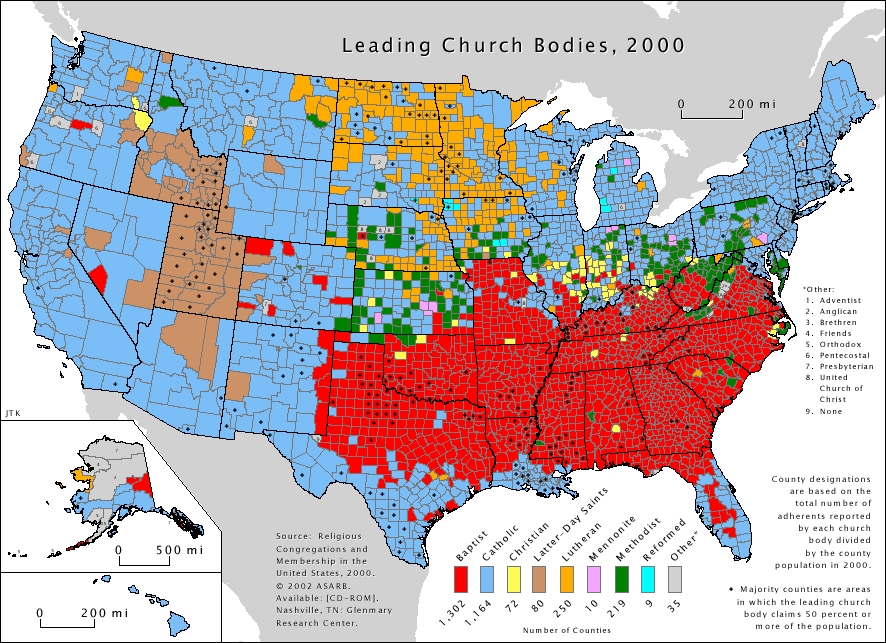
Leading Church Bodies, 2000


This is an interesting map that can have some apologetic applications. I disagree with the map it's use of the category of Christian. This should be non-denominational not Christian. If it was Christian then the majority of the map would be one color because Catholic, Baptists and many of the others are Christian. Click here for a closer view of the map.

The Teenage Brain

Blakemore found that teenagers rely on the rear part of the mentalising network to make their decisions, an area of the brain called the superior temporal sulcus. In contrast, adults use the front part, called the prefrontal cortex.

The superior temporal sulcus is involved in processing very basic behavioural actions, whereas the prefrontal cortex is involved in more complex functions such as processing how decisions affect others. So the research implies that "teenagers are less able to understand the consequences of their actions", says Blakemore. ~Helen Thomson, Norwich, Why Adolescents put themselves first


The article interprets the implication of the finding as authorities should be more lenient on teenagers. My take is that we need to be more protective of teenagers until their brains are fully developed. What does this have to do with Apologetics? Well I guess it helps us better understand a group of people that we minister to.

Wednesday, September 06, 2006

Catholic Environmentalism


As followers of Christ, Catholic are called to work towards justice in all areas of life. This applies even to God’s creation. We are called to be just stewards of Gods gifts and this entails fighting against the exploiting of God’s creation. Admittedly there are greater injustices in the world, (i.e. abortion, genocide, and poverty) but we should be willing to fight wherever injustice is present.


Indirect Apologetic Application

Environmentalism can be common ground for Catholics and other groups in secular society. It can be a foundation where sin can be recognized as the cause of injustice. It is a situation where we must repent. It points to the propensity of modern man not to submit to reality but to try to exploit nature to fulfill narcissistic desires. C.S. Lewis said the following in regarding to modern culture;

There is something which unites magic and applied science [technology] while separating both from the `wisdom' of earlier ages. For the wise men of old the cardinal problem had been how to conform the soul to reality, and the solution had been knowledge, self-discipline, and virtue. For magic and applied science alike the problem is how to subdue reality to the wishes of men, and the solution is a technique. ~C. S. Lewis, The Abolition of Man
Secular Environmentalists and Catholics need to come together to seek the wisdom of how each individual can conform and submit to objective truth. Not through a techological quick fix through domination, but by the road of knowledge, self-discipline, and virtue which is just stewardship.

Some links of interest:
Christian Environmentalism
Catholic Conservation Center